


Laundry Washing Gel Concentrate
Scent: Available in 1 fragrance
Scent: Available in 1 fragrance

Scent: Available in 1 fragrance


Scent: Available in 5 fragrances


Scent: Available in 6 fragrances


Scent: Available in 6 fragrances


Scent: Available in 3 fragrances


Scent: Available in 3 fragrances
Scent: Available in 6 fragrances


Scent: Available in 6 fragrances


Scent: Available in 6 fragrances


Scent: Available in 3 fragrances


Scent: Available in 3 fragrances


Scent: Available in 6 fragrances

Scent: Available in 1 fragrance

Scent: Available in 1 fragrance

Scent: Available in 1 fragrance

Scent: Available in 1 fragrance

Scent: Available in 1 fragrance


Scent: Available in 3 fragrances


Scent: Available in 3 fragrances


Scent: Available in 3 fragrances


Scent: Available in 3 fragrances


Scent: Available in 3 fragrances
Most scent boosters on European shelves rely on fragrance microcapsules — tiny polymer shells that sit on fabric and break open with friction. They work, and they are on a clock.
Under the EU restriction on intentionally added synthetic polymer microparticles (Commission Regulation (EU) 2023/2055, amending REACH Annex XVII), products containing them cannot be placed on the EU market after the transition period for their category.
| Product group | Cannot be placed on the EU market after |
|---|---|
| Detergents, waxes, polishes and air care products in scope | 17 October 2028 |
| Encapsulated fragrances | 17 October 2029 |
For a retailer, the practical question is not whether the deadline arrives but what happens before it. Reformulating a private-label range means new samples, new consumer testing, new artwork, new documentation and a period where the product on shelf smells different from the one customers were loyal to. Brands that reformulate late do it under time pressure, with whatever their supplier can deliver.
Our in-wash scent booster beads contain no fragrance microcapsules. The performance comes from the composition and how it deposits on fibre, not from a polymer shell. A range built on them today does not have a reformulation project waiting inside it.
This is the part of the category that is least understood, and it explains why the products exist at all.
Detergent is a cleaning system. Its surfactants lift soil and hold it in suspension so it leaves with the water — and they treat fragrance the same way. Most of the perfume in a detergent is rinsed out with everything else it was designed to remove. What the customer smells is the wet wash and the first hours of drying, then very little.
Three things change that:
Two commercial consequences. First, “fragrance that lasts” cannot be solved inside a detergent — it needs a product later in the process, which is exactly why in-wash boosters became the fastest-growing part of the laundry aisle. Second, a customer who says their laundry does not smell of anything usually has a drying problem, not a detergent problem, and is one product away from being satisfied.
| Product | When it acts | What it does |
|---|---|---|
| Laundry washing gel concentrate with Odorano® |
Main wash, effective from 30 °C | Cleans and neutralises odour at the source rather than covering it. Up to 100 washes per litre |
| Fabric conditioner concentrate | Final rinse | Softness, crease handling and the first fragrance layer. Up to 67 washes per litre |
| In-wash perfume oil 150 ml and 300 ml |
Added to the drum | Controlled, concentrated fragrance dosed by the user — the intensity lever |
| In-wash scent booster beads 370 g, 24 doses |
Into the drum before the cycle | Long-lasting fragrance without microcapsules; the visible, giftable format of the category |
| Scent booster liquid | Into the drum | The same job as beads for customers who prefer to pour |
| Single-dose sachet | Into the drum | Trial, sampling and travel; the lowest-friction way into the category |
| Fabric freshener | Between washes | Refreshes textiles that are not dirty enough to wash |
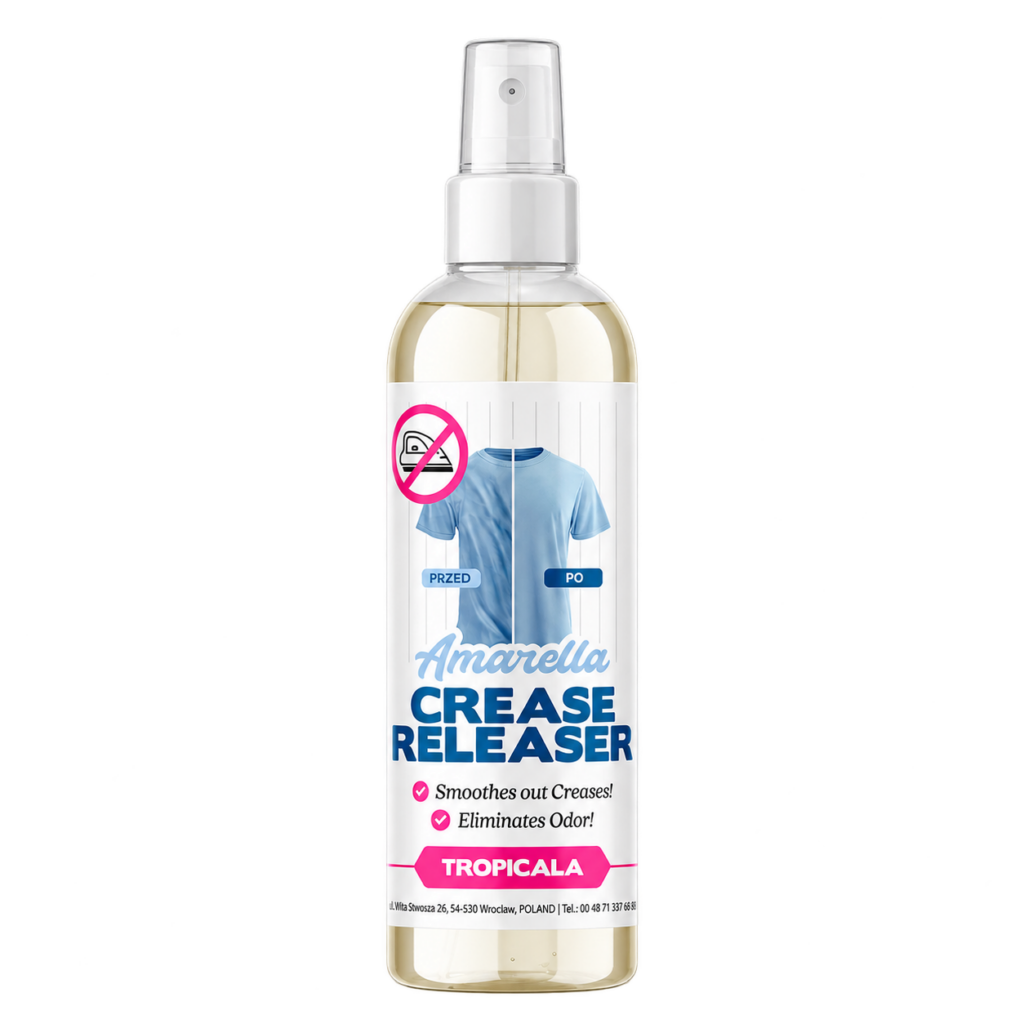
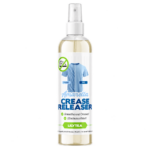
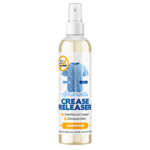
| Crease and wrinkle releasers 75, 250 and 500 ml, incl. fragrance-free |
After drying | Smooths fabric and cuts ironing time — the step people most want to skip |
| Ironing water and ironing spray | During ironing | Fragrance and glide where heat would otherwise strip scent |
| Curtain care programme | In situ | Refreshes and de-creases curtains without taking them down, washing or ironing |
| Hypoallergenic variants | Across the range | For sensitive-skin positioning, including fragrance-free options |
Most partners start with the first and extend into the second once a scent library has proved itself.
Towels that smell musty after a day. Sportswear that comes out of the machine clean and smells again once worn. A front-loading machine with a permanent smell of its own. These are the complaints that end brand loyalty, and adding more perfume makes them worse — the customer ends up with perfume and the original smell at once.
Our washing gel carries Odorano® technology, which acts on the malodour itself rather than covering it, and works from 30 °C — the temperature most consumers actually wash at, and the one at which odour problems are worst. For a range, this is the product that converts a dissatisfied customer rather than a satisfied one.
Concentrates change the arithmetic of a laundry range and are frequently mispriced because buyers compare shelf price against a diluted competitor.
A concentrate can carry a higher shelf price, a lower cost per wash and a smaller pack all at once — which means better margin, cheaper logistics, less shelf space per dose and a defensible consumer story. The mistake is listing it at a mass-market bottle price and giving all three advantages away.
A note worth making to anyone drafting pack copy: claims about killing bacteria, sanitising or disinfecting move a laundry product into biocidal territory and a different regulatory regime entirely. Odour neutralisation is not a biocidal claim; “antibacterial” is. We will tell you where that line sits before artwork goes to print rather than after.
We already manufacture in-wash scent boosters under private label for some of the largest retail groups in the EU, which is the short answer to whether the range scales.
Two routes:
White label — an existing Amarella formulation in your packaging, with your brand and your fragrance selection from our library. Around two months to market.
Custom project — an exclusive fragrance developed by our perfumers at our laboratory in Wrocław, with formulation adjustments and bespoke packaging. The scent stays reserved for your programme, which in a category driven by fragrance loyalty is the part worth owning.
A concentrated fragrance product added directly to the washing machine drum, in beads or liquid form, before the cycle starts. It is also sold as an in-wash scent booster, laundry perfume or wash perfume, depending on the market. Unlike detergent perfume, which is largely rinsed away, a scent booster is formulated to deposit on the fibre and release fragrance gradually over the days afterwards.
The beads dissolve in the drum during the wash and the fragrance concentrate binds to the fabric rather than leaving with the rinse water. Scent is then released slowly as the textile is handled and worn.
No. Our in-wash scent booster beads are formulated without fragrance microcapsules. This matters commercially as well as environmentally: under the EU microplastics restriction, detergent products in scope cannot be placed on the EU market after 17 October 2028, and encapsulated fragrances after 17 October 2029.
A fabric softener conditions the fibre and carries fragrance as part of that; a scent booster does one job only and does it at a much higher concentration. They work together — the softener in the rinse, the booster in the drum — and most customers who use both report the longest-lasting result.
Usually drying rather than washing. Hot tumble drying drives off the volatile part of a fragrance, and drying outdoors disperses it. A product added to the drum, rather than relying on detergent perfume, is what survives the process.
Masking it does not work, because the source remains in the fibre. It needs a detergent that acts on the odour itself — ours carries Odorano® technology and works from 30 °C — rather than a stronger perfume on top of it.
Yes, including high-efficiency machines. The beads dissolve fully during the cycle. As with any laundry product, dosing to the instructions matters more than the format.
They are compatible with everyday fabric types. For delicates, wool and technical sportswear, follow the garment’s own care label first — those fabrics have handling requirements that come before any fragrance decision.
Yes, across the range — hypoallergenic in-wash perfume oils, scent booster beads and crease releasers, plus a fragrance-free crease releaser. This tier has grown steadily and is frequently missing from private-label ranges.
Yes. White label using an existing formulation with your branding and fragrance selection, or a custom project with an exclusive scent and bespoke packaging. We already produce in-wash scent boosters under private label for major EU retail groups.
A white label programme typically reaches market in around two months. Minimum quantities depend on the product, the format and whether packaging is custom — tell us the programme and we will confirm both in the same reply.
At our own BRC-certified facility in Wrocław, Poland, with fragrances developed in our laboratory there. EU production, EU documentation and short lead times for European buyers.
In this category the fragrance is the brand — it is what a customer recognises, repurchases and refuses to substitute. Tell us the market, the price position and whether you are replacing a range or building one, and we will send samples of the directions worth testing first.
ELiX — Your Brand. Certified Quality.