Company info / Air Fresheners
Wholesale Car Air Fresheners: A Buying Guide for Online Retailers
What Online Retailers Actually Need From a Wholesale Car Air Freshener Supplier
Selling car air fresheners online is not the same business as stocking a physical shop. Marketplace algorithms reward consistent availability, clean product content, and low return rates. That means the supplier decision affects far more than unit cost. A wholesale car air freshener supplier who runs out of stock during Q4 will drop your Buy Box position on Amazon. A supplier who ships without a UFI code on the label will trigger listing suppression on any EU marketplace enforcing CLP rules.
- Online resellers typically care about four things when they source:
- Product breadth wide enough to build out a category page rather than a single listing.
- Compliant labelling that ships cleanly across every EU jurisdiction you sell into.
- Packaging that survives fulfilment centres, courier belts, and last-mile handling.
- Reorder reliability, because a listing that goes dark for two weeks loses months of ranking work.
Price matters, but it comes fourth. A cheaper unit that generates returns, negative reviews, or a compliance takedown is a false economy once the marketplace maths catches up. In our experience, buyers who chase the lowest CIF price without checking the paperwork behind it are the buyers who write to us six months later, asking whether we can rescue their listings.
There is also a channel-fit question buyers underweight on the first call. A car air freshener that performs on a physical shelf does not always translate to an Amazon detail page. Marketplace unit economics turn on referral fees, storage, and returns rate, so a product with a marginal packaging failure or a fragrance that fades quickly on delivery will not survive the first review cycle. E-commerce buyers get better results asking the supplier which SKUs already ship well through fulfilment centres, and which formats have review histories to lean on when a new listing goes live.
Car Air Freshener Formats That Perform on Marketplaces
Not every car air freshener format sells equally well online. Some are courier-friendly and hold a stable price. Others generate breakage claims and thin margins. The category typically breaks into five main formats worth stocking for online resale.
Paper Hanging Car Fresheners
Light, cheap to ship, and easy to build review depth on. Strong for entry price points and multi-pack listings. The classic traffic driver at the front of a category page. Our BONDÉ paper car perfume range is a working example of the tier: multiple fragrance variants under a single SKU family, packaging optimised for envelope shipping.
Vent-Clip Fresheners
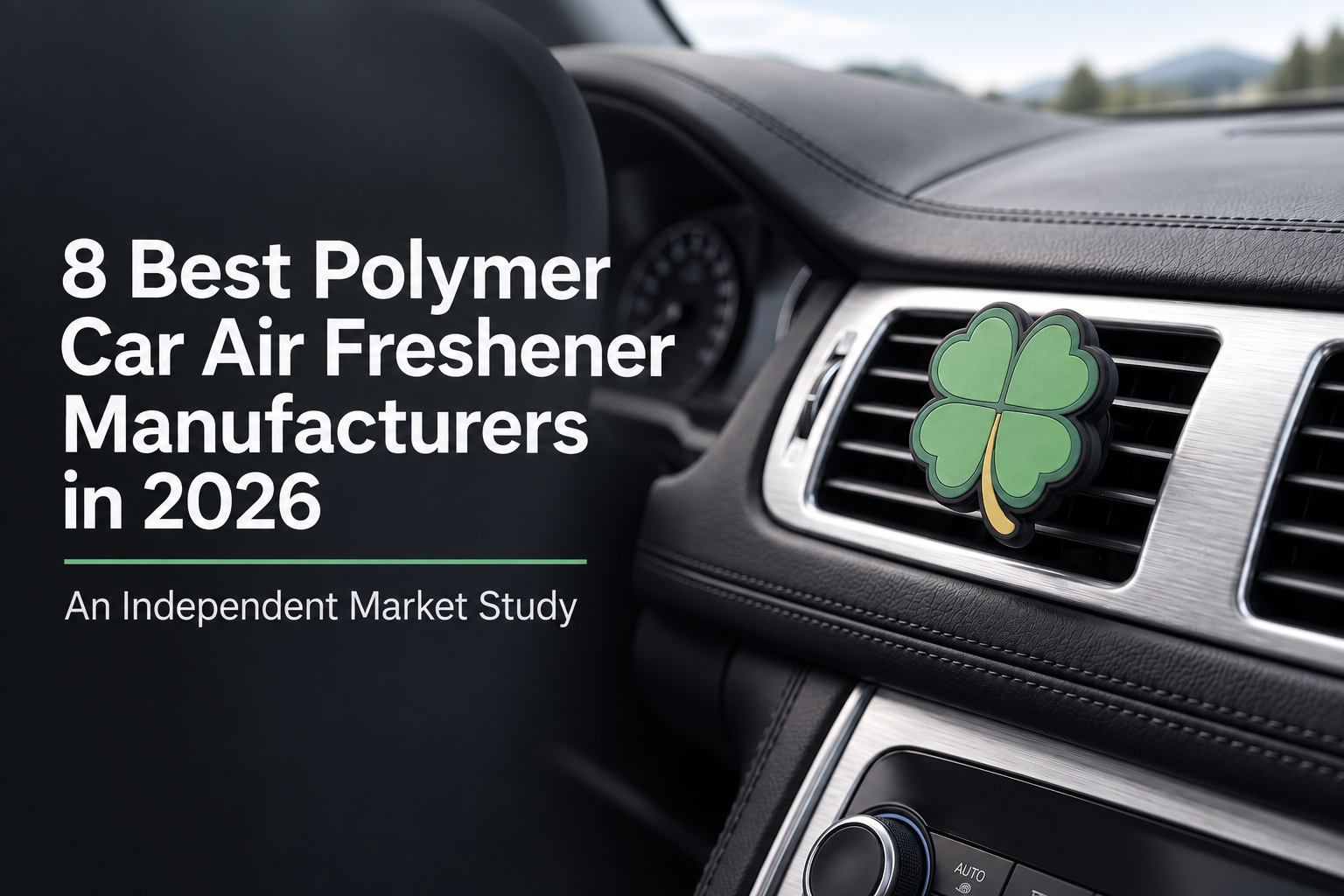
Higher perceived value and better average order value. Presentation-led packaging photographs well for marketplace hero images and supports a mid-tier price band.
Gel-Based Car Fresheners
Longer scent life, which suits subscription-style listings and Subscribe and Save placements. Needs leak-resistant secondary packaging so the fulfilment journey does not become a returns problem.
Membrane and Liquid Car Diffusers
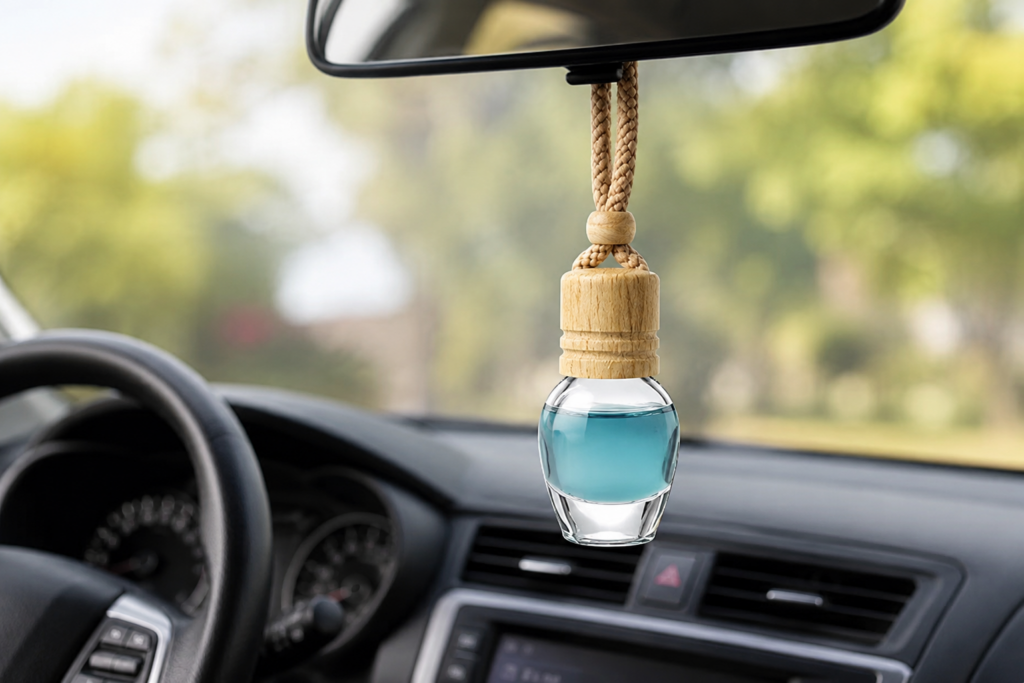
Premium tier, work well for gifting angles and for cross-category bundling with home fragrance. Higher margin per unit and stronger review sentiment when the fragrance quality holds up. The wooden cap car diffuser format sits here: perfumery-inspired composition in a design-led case that photographs well against a plain hero background.
Refill Systems
Higher lifetime value per customer, harder to launch cold on marketplaces because the base unit and refill economics have to be explained on the listing. Best introduced once the category has a review base to lean on.
Online retailers typically build the shelf with a paper freshener at the traffic-driver price point, a vent clip in the mid tier, and a gel or membrane diffuser at the premium end. The three-tier structure supports upselling, review depth across price bands, and repeat purchase behaviour.
Compliance Documents Every EU Marketplace Listing Requires
Marketplace compliance sits on top of standard EU chemical regulation. Air fresheners are covered under REACH and CLP. Every SKU sold in the EU must carry a UFI code on the label, tied to a Poison Centre Notification submission for each Member State the product is placed on the market in. IFRA compliance governs fragrance composition. If your supplier cannot provide the paperwork for each SKU, the listing is at risk from day one.
Amazon, Kaufland, and Allegro all reserve the right to remove listings without warning when compliance documentation is missing or inconsistent. The reinstatement process is slow and unpredictable. Retailers who source from Chinese OEMs often discover that the UFI code and PCN submission simply do not exist for the EU jurisdictions they sell into, and are then left to solve the compliance gap themselves at speed.
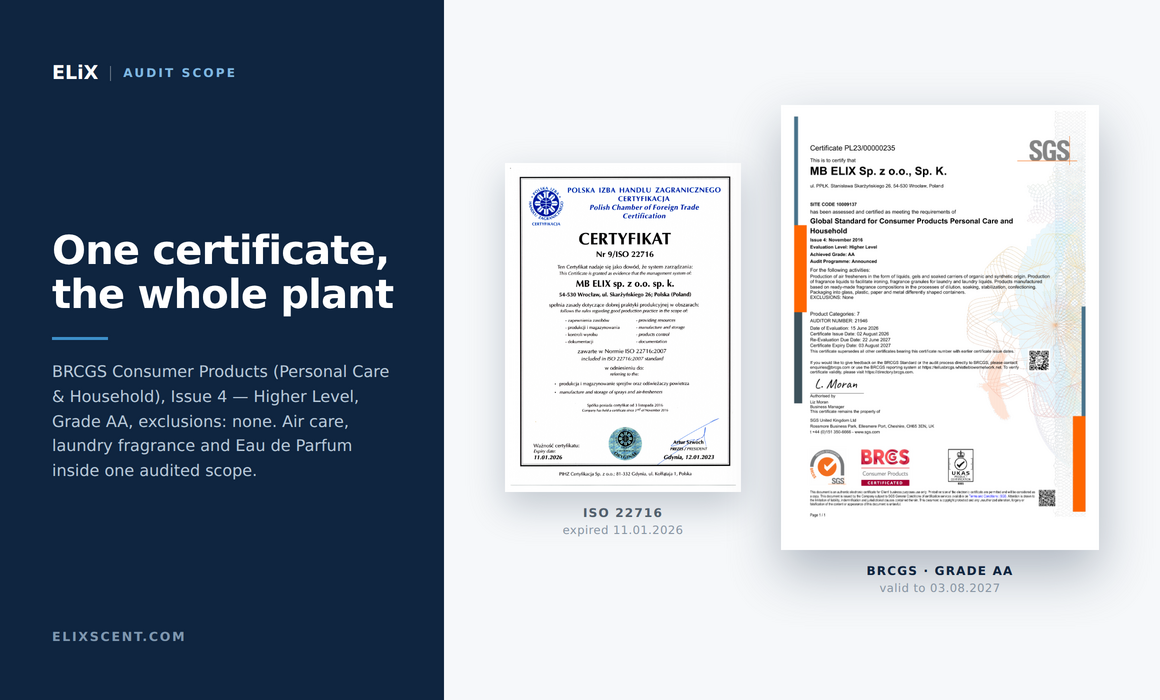
A European manufacturer running BRC GS-certified production, ISO 9001 quality management, ISO 14001 environmental management, and independent laboratory verification through TÜV SÜD, alongside full REACH, CLP, UFI, PCN, and IFRA documentation, removes that risk from the sourcing decision. Every SKU should ship with the paperwork ready for marketplace upload. That is a baseline expectation for e-commerce buyers, not a premium feature.
PCN filings are made per Member State, not once for the EU as a whole. If you sell into Germany, France, Poland, and Spain from the same warehouse, each of those markets needs its own notification tied to the correct UFI on pack. Buyers who plan to expand across the EU should ask the supplier upfront which Member States are already covered, and what timeline applies for adding new ones. A supplier who treats compliance as an add-on rather than a standing operation is a supplier who will slow your expansion down.
MOQs, Lead Times, and the Real Cost of Getting It Wrong
MOQ conversations dominate first calls with e-commerce buyers. The relevant numbers depend on whether you are stocking existing catalogue SKUs, ordering a white-label run, or commissioning a fully custom private-label programme.
Standard catalogue orders usually clear at lower MOQs and shorter lead times, which is useful for testing scent variants or seasonal launches. White-label programmes with your branding applied to an existing formula sit in the middle: moderate MOQ per SKU, moderate lead time, faster to shelf than a full custom brief. Custom development takes longer at every stage, including fragrance brief, sample rounds, artwork, regulatory paperwork, and production. Buyers going custom should plan the sourcing calendar around it rather than against it.
The most expensive mistake we see is ordering too little of a proven seller and running out during peak weeks. Marketplace ranking algorithms punish stockouts harder than most retailers realise. It is usually cheaper to hold two months of stock on a top mover than to lose Buy Box position and rebuild ranking from scratch.
Lead time transparency matters as much as the MOQ number itself. A supplier who quotes a competitive first-order lead time but goes quiet on the reorder is a supplier who will leave you exposed at the point where sales are actually working. Ask what the standing reorder lead time is on a repeat SKU when the factory is under normal load, and what it becomes during Q4. A serious manufacturer will answer both questions directly, because the honest answer supports the buyer’s planning rather than undermining the sale.
Vetting a Supplier Before Placing the First Order
A short list of questions worth asking before signing a purchase order:
- Are you BRC GS, ISO 9001, and ISO 14001 certified, with independent lab verification (for example TÜV SÜD)? Can you share the current audit certificates?
- Do you have REACH, CLP, UFI, and PCN documentation ready for every SKU I would list?
- What is your in-house R&D setup, and can you develop a bespoke scent when the catalogue does not fit?
- What is the actual lead time on a repeat order of a catalogue SKU, and on a first-time custom SKU?
- What packaging options are available for e-commerce fulfilment, and can you ship marketplace-ready cases?
- Can you share references or case studies from other e-commerce buyers in the EU?
Answers to those six questions separate a serious manufacturer from a broker with a warehouse. At ELiX, our factory in Poland has produced car air fresheners for 25 years under BRC GS, ISO 9001, and ISO 14001 audited processes, with independent laboratory verification through TÜV SÜD, and every catalogue SKU carries the full EU compliance file on request. Our in-house Aroma Formulation Labs develop bespoke fragrance briefs when a stock scent will not carry the positioning a listing needs. Retailers already scoping a car air freshener line can pull ELiX home air fresheners from the same production base and compliance file, useful when the category plan runs wider than a single vertical. Buyers can browse the ELiX car air freshener range to see the current format mix before scoping a private-label brief.
Building a Car Air Freshener Line That Holds Its Margin Online
Buying wholesale car air fresheners for an online retail business is a category decision, not a single SKU decision. The supplier you choose sets the ceiling on what you can list, where you can list it, and how quickly you can respond when a scent lands and needs a reorder. Compliance paperwork, format mix, MOQ structure, and reorder reliability all matter more than the sticker price on the first unit.
If you are building or expanding a car air freshener category for marketplace resale, our private-label car air freshener programme covers everything from catalogue SKUs to fully bespoke development, backed by EU compliance documentation and our BRC GS, ISO 9001, and ISO 14001 certified manufacturing base in Poland. Request a private label quote to start scoping the line and lock in production capacity ahead of your next launch window.
Frequently Asked Questions
Where Can Online Retailers Buy Wholesale Car Air Fresheners in Europe?
Online retailers buying wholesale car air fresheners in Europe should source directly from an EU-based manufacturer rather than through a trader. Direct sourcing gives you access to the full compliance file for each SKU, control over packaging specifications, and reorder lead times that a trader cannot guarantee. ELiX manufactures car air fresheners in Poland under BRC GS, ISO 9001, and ISO 14001 certified processes with independent TÜV SÜD verification, and full REACH, CLP, UFI, PCN, and IFRA documentation on every SKU. That combination is what marketplace listings on Amazon, Kaufland, and Allegro require to stay live.
What Car Air Freshener Formats Sell Best on Marketplaces Like Amazon?
Paper hanging fresheners drive traffic at the entry price point, vent clips carry the mid tier, and gel or membrane diffusers occupy the premium end. A three-tier category structure across those formats tends to outperform a single-format listing on marketplaces like Amazon, because it supports upselling, cross-selling, and repeat purchase. Format choice should also account for courier durability. Paper and vent-clip fresheners ship without issue, while gel formats need leak-resistant secondary packaging to avoid return rates that erode margin.
What Compliance Documents Do EU Marketplaces Require for Car Air Fresheners?
EU marketplaces require air fresheners to comply with REACH and CLP regulation, carry a UFI code on the label, and have an active Poison Centre Notification for each Member State of sale. IFRA compliance covers the fragrance composition. BRC GS, ISO 9001, and ISO 14001 certificates are not marketplace requirements, but they signal audited production and independent lab verification, and are often requested by private-label buyers. A supplier who cannot produce these documents on request should be treated as a compliance risk, not just a sourcing risk.
What Is a Typical MOQ for Wholesale Car Air Fresheners?
MOQ depends on whether you are ordering catalogue stock, a white-label run, or a fully custom private-label SKU. Catalogue stock clears at the lowest MOQ and shortest lead time and is useful for testing new scent variants. White label with your branding on an existing formula sits at a moderate MOQ per SKU. Custom development carries the highest MOQ because it triggers R&D, sample rounds, artwork, and separate regulatory filings. Request specific MOQ figures for each cooperation model when you scope the first order.
How Do I Vet a Wholesale Car Air Freshener Supplier for E-commerce?
Vet the supplier on four fronts: certifications, compliance paperwork, R&D depth, and reorder reliability. Ask for BRC GS, ISO 9001, and ISO 14001 certificates with independent lab verification such as TÜV SÜD, sample UFI and PCN documentation, evidence of in-house fragrance development, and a realistic lead time for both repeat and first-run orders. Check whether the packaging supports marketplace fulfilment without repackaging on your side. A supplier that answers these questions clearly is a partner you can build a category on. A supplier that deflects is a listing risk waiting to trigger.